
Author: Dana Cole

  • Slow Down to Speed Up: Your 10-Minute Moving Meditation

    Slow Down to Speed Up: Your 10-Minute Moving Meditation

    Life moves fast. You know this. The to-do list grows, the notifications ping, and before you know it, another day blurs by. We’re constantly chasing the next thing, pushing for more, moving quicker. But what if the answer to feeling more in control, more focused, and actually *speeding up* your progress, was to do the opposite? What if it was to slow down?

    Today, we’re talking about a simple, powerful practice: ten minutes of slow walking. Not a power walk. Not a jog. Just a deliberate, unhurried walk that acts as a moving meditation. This isn’t about clearing your schedule for a yoga retreat. It’s about reclaiming a small slice of your day, wherever you are, to hit the reset button.

    The real reason this works isn’t mystical. It’s physiological and psychological. When you intentionally slow your pace, your nervous system gets the message to calm down. Your brain shifts from ‘fight or flight’ to ‘rest and digest’. This isn’t just about feeling good; it’s about optimizing your body and mind for clearer thinking, better decision-making, and reduced stress. It’s practical self-care that delivers tangible results.

    Why Slow Walking Changes Everything

    You might think, “I walk all the time, how is this different?” The difference is intention. Most of our walking is a means to an end: getting to the car, grabbing coffee, crossing the office. We’re usually thinking about what’s next, checking our phones, or planning our day. That’s not the kind of walking that helps you reset.

    Slow walking as a moving meditation is about presence. It’s about bringing your attention to the *act* of walking, rather than the destination. It’s a gentle anchor to the here and now. This simple shift is powerful because it breaks the cycle of constant mental chatter and future-tripping that leaves us drained and overwhelmed.

    When you focus on the present, even for ten minutes, you give your brain a much-needed break from problem-solving and planning. This allows you to return to your tasks with fresh eyes, improved focus, and a quieter mind. It’s like defragging your mental hard drive.

    How to Practice Your 10-Minute Moving Meditation

    The beauty of this practice is its simplicity. No special gear. No quiet room required. Just you, your two feet, and ten minutes.

    1. Find Your 10 Minutes

    • Lunch Break: Step outside the office building or even just walk around your block.
    • After Dinner: Instead of immediately hitting the couch, take a short stroll around your neighborhood.
    • Morning Reset: Before the demands of the day kick in, walk around your yard or down the street.
    • Anytime You Feel Overwhelmed: If you’re feeling stressed, step away for ten minutes.

    The key is to make it a non-negotiable pause. Treat it like an important appointment.

    2. Set Your Intention

    Before you even take the first step, take a deep breath. Tell yourself:

  • Grand Velas Los Cabos Blends Mexican Ritual and Wellness: Steal It at Home

    Grand Velas Los Cabos Blends Mexican Ritual and Wellness: Steal It at Home

    What the report says

    A new report from luxurytravelmagazine.com highlights a stay at the Grand Velas Boutique Hotel in Los Cabos, where wellness gets tied to Mexican culture and tradition rather than treated as a separate spa add-on.

    From the headline, the pitch is clear. This isn’t just massages and green juice. It’s local ritual, regional food, and a sense of place woven into how guests rest and recover. Wellness as culture, not as a checklist.

    I can’t confirm the finer details of the experience, so I’ll keep my claims modest. But the framing alone is worth talking about, because it points to something most of us get wrong about feeling good.

    The real reason this works

    Here’s the real reason a wellness trip like this hits different: it wraps healthy habits inside meaning. And meaning is the part that actually makes habits stick.

    You’ve probably tried to force a routine before. Drink more water. Stretch every morning. Slow down. It fizzles out in a week. Not because you’re lazy. Because it felt like a rule with no story behind it.

    When a habit is connected to culture, ritual, or something you genuinely care about, your brain stops treating it as a chore. It becomes part of who you are. That’s the quiet magic these resorts are selling. Not the setting. The story.

    You don’t rise to your goals. You fall to the meaning behind your routines.

    What this means for everyday people

    Most of us can’t book a boutique suite in Los Cabos this month. Good news: the takeaway costs nothing.

    You don’t need a resort to attach meaning to your rest. You need intention. The people who feel genuinely well aren’t the ones with the fanciest wellness budget. They’re the ones who turned ordinary moments into something that matters to them.

    Think about your own background. Your family. The food, the music, the small rituals you grew up around. There’s likely a source of calm already sitting in your history, waiting to be used on purpose.

    Try this today

    Pick one everyday moment and turn it into a small ritual. Not a big one. One. Here’s how:

    1. Choose the moment. Morning coffee. The walk to your car. The first ten minutes after work.
    2. Add one meaningful cue. A song from your childhood. A dish your grandmother made. A phrase you say out loud before you start.
    3. Slow it down by 60 seconds. Don’t rush through it. Actually taste the coffee. Actually feel the sun. Presence is the whole point.

    That’s it. You just built a wellness ritual with real roots, and it didn’t require a plane ticket.

    The bigger picture

    The Grand Velas story is a reminder that wellness was never supposed to be sterile. Cultures around the world have known for centuries how to rest, gather, eat, and heal with intention. Modern wellness often strips that away and sells it back to us as an expensive fix.

    You already have access to the good part. The connection. The meaning. The ritual. You just have to claim it.

    If you want a simple structure to build these habits without overthinking it, our free 7-Day Mind-Body Reset at manifestedfit.com walks you through small daily moves that stack into real momentum. No resort required.

    Borrow the idea, not the price tag. Attach meaning to one ordinary moment today, and watch how much steadier the rest of your week feels.

    Originally reported by luxurytravelmagazine.com: “Culture, Wellness & Mexican Traditions: A Stay at Grand Velas Boutique Hotel Los Cabos”. The summary and takeaways above are our own.

  • Filipino Weaving Meets Wellness at HWONFEX 2026: The Real Reason It Calms You

    Filipino Weaving Meets Wellness at HWONFEX 2026: The Real Reason It Calms You

    What the report covered

    A new report from the original report (ABS-CBN) looks at how traditional Filipino weaving is showing up in the wellness conversation at an event called HWONFEX 2026. The headline points to a growing intersection between handcraft and health.

    I couldn’t pull the full article, so I’ll keep this modest. The reporting suggests that Filipino weaving traditions and modern wellness are being presented together, likely as part of a larger showcase. That’s the claim. The rest is where I come in.

    Because whether or not the event says it out loud, there’s a real reason handcraft like weaving makes people feel steadier. And you don’t need a festival ticket to use it.

    The real reason weaving calms you

    Here’s the honest mechanism. Repetitive handwork gives your brain a simple, rhythmic task to hold onto. Your hands move in a predictable loop. Your eyes track the pattern. Your breathing tends to slow to match the pace.

    That’s it. No mysticism required.

    When your attention has one small, doable job, it stops spinning out into tomorrow’s worries. This is why people describe knitting, weaving, or beading as “meditative.” It’s not magic. It’s your nervous system getting a break from constant open-loop thinking.

    Filipino weaving carries something extra, too: culture, story, and connection to the people who did it before you. That sense of belonging matters. Doing a craft your grandmother might have recognized is its own kind of grounding.

    Repetition plus meaning equals a calm you can actually feel.

    Why this matters for everyday people

    Most of us are drowning in inputs. Notifications. Tabs. Half-finished thoughts. We keep reaching for our phones to “relax,” and then feel more scattered, not less.

    Craft flips that. It’s slow on purpose. It asks for your hands, not your feed. And unlike a lot of wellness advice, it doesn’t require you to sit still and “clear your mind” — which almost nobody can do on command anyway.

    So if a report is nudging weaving into the wellness spotlight, good. It’s a reminder that some of the oldest tools for a calm mind are still the best ones.

    One thing you can do today

    You don’t need to become a weaver. You need one repetitive, hands-on task with a clear rhythm. Try this:

    1. Pick one small handcraft. Weaving, braiding, knotting a friendship bracelet, even folding paper. Something with a repeatable motion.
    2. Set a 15-minute timer. Phone in another room, face down.
    3. Match your breath to your hands. Don’t force it. Just notice the pace and let your breathing settle toward it.
    4. Finish one small piece. The point is the doing, not perfection. A completed small thing beats a perfect nothing.

    When the timer ends, check in. Slower shoulders? Quieter head? That’s your answer. That’s the mechanism working.

    Make it a tiny ritual

    The trick is consistency, not intensity. Fifteen minutes most days will do more for your baseline calm than one long session once a month. Tie it to something you already do — after dinner, before bed, during a call.

    If you want a simple structure to build this kind of small daily habit into your week, our free 7-Day Mind-Body Reset at manifestedfit.com walks you through gentle, repeatable practices like this one. No equipment, no pressure.

    The takeaway from this report is simple, and it’s old news dressed in new clothes: working with your hands works on your mind. Filipino weavers have known it for generations. Now it’s your turn to borrow the wisdom.

    Start small. One loop at a time.

    Originally reported by the original report: “Weave Art: How Filipino craft and wellness intersect at HWONFEX 2026 – abs-cbn.com”. The summary and takeaways above are our own.

  • The Two-Minute Morning Anchor: One Ritual Before You Touch Your Phone

    The Two-Minute Morning Anchor: One Ritual Before You Touch Your Phone

    Here is the real reason your day feels scattered by 9am: you handed your attention away before you were even awake.

    You reach for the phone. Notifications, headlines, someone else’s crisis, three requests, a comparison trap. You haven’t taken a full breath yet and your nervous system is already sprinting. That’s not a discipline problem. That’s a design problem. Phones are built to grab the first attention you produce, and the first attention of the day is the cleanest you’ve got.

    You don’t need a 20-step routine to fix this. You need two minutes that are yours before the world gets a vote. I call it the morning anchor.

    Why phone-first mornings scatter you

    When you wake, your brain is coming up from rest into alertness. It’s suggestible. It’s looking for a signal that says, “Here’s what matters today.” If the first signal is a feed, your brain decides what matters is reacting. To everything. All at once.

    The result is a kind of low-grade static that follows you for hours. You feel busy but not focused. Reactive but not intentional. That’s the cost of letting a screen set your tone.

    The fix isn’t willpower. It’s sequence. Do one small thing first, and the phone becomes a tool you pick up later, instead of a hand that grabs you.

    The three-part anchor

    Two minutes. Three parts. That’s the whole thing. Keep it that short on purpose, because a ritual you actually do beats a perfect one you abandon by Thursday.

    1. Breath (30 seconds)

    Before your feet hit the floor, take three slow breaths. In through the nose for a count of four, out for a count of six. Longer exhale than inhale. That’s the part that tells your body you’re safe and it’s okay to come online gently.

    You’re not clearing your mind. You’re just giving your body a signal that isn’t a screen.

    2. One sentence intention (30 seconds)

    Say one sentence about how you want to move through today. Out loud or in your head. Not a to-do list. A tone.

    • “Today I move at my own pace.”
    • “I get to focus on one thing at a time.”
    • “I’m allowed to be steady even if things get busy.”

    This is the manifestation part, and here’s the unmystical truth of why it works: naming the tone you want makes your brain start scanning for chances to live it. You prime yourself to notice calm, focus, or courage instead of only noticing chaos.

    3. One glass of water (60 seconds)

    Drink a full glass of water before coffee, before the phone, before anything else. You’ve gone hours without a drop. A glass of water is a small, concrete act of taking care of yourself first. It also gives your hands something to do that isn’t scrolling.

    Keep the glass on your nightstand the night before. Make it easy. The less you have to think, the more likely it happens.

    How to keep it when mornings are chaos

    Real mornings have crying kids, early meetings, and alarms that get snoozed three times. So build the anchor to survive that.

    • Shrink it, don’t skip it. No time for all three? Do one breath and one sentence in the time it takes to sit up. That still counts. That’s still yours.
    • Attach it to something you already do. Do your intention while the coffee brews. Drink your water while the shower warms up. You don’t need extra minutes, you need a trigger.
    • Move the phone one step away. Charge it across the room, or in another room. The two seconds of walking is often enough to break the automatic grab.

    The goal isn’t a flawless morning. The goal is claiming the first two minutes before you give the rest away.

    No shame for snoozing

    If you hit snooze, you’re not broken and you didn’t ruin anything. The anchor isn’t a test you pass or fail. It’s a small door you can walk through whenever you actually wake up, whether that’s the first alarm or the fourth.

    Some mornings you’ll nail all three parts. Some mornings you’ll get one breath and call it a win. Both are the practice. Consistency beats intensity here, and forgiveness is what makes consistency possible.

    Start tomorrow. Put a glass of water by your bed tonight, decide your one sentence now so you don’t have to think, and let the phone wait ninety more seconds than usual.

    If you want a little structure to build on this, the free 7-Day Mind-Body Reset at manifestedfit.com walks you through small daily anchors like this one, no overhaul required.

    Two minutes. Your attention. Before anyone else gets it. That’s the whole win.

  • Why Musicians Are Turning to Mindfulness Before They Perform

    Why Musicians Are Turning to Mindfulness Before They Perform

    What the report says

    A new study covered by The Violin Channel points to something musicians have quietly known for a long time: how you focus your mind affects how you play. According to the reporting, mindfulness practice appears to matter for music performance, not just musicianship.

    I want to be careful here. The full article body wasn’t available to me, so I’m going off the headline. But the direction is clear enough. A new report suggests that training your attention helps you perform under pressure. That tracks with what a lot of performers already feel in their bodies before they walk on stage.

    The interesting part isn’t that mindfulness sounds nice. It’s that it shows up where the stakes are high, in front of an audience, with no room for a redo.

    Here’s the real reason it works

    Performance anxiety isn’t a character flaw. It’s your nervous system reacting to a spotlight. Your heart speeds up. Your breath goes shallow. Your attention scatters into worst-case scenarios.

    Mindfulness doesn’t erase that. It gives you a place to put your attention that isn’t the fear. Instead of your brain screaming “don’t mess up,” you anchor to something real: your breath, your hands, the first note. That narrows your focus to the thing in front of you.

    Musicians need this because the work is public and unforgiving. But you don’t need a violin for the same principle to apply. A job interview is a performance. A hard conversation is a performance. Speaking up in a meeting is a performance.

    The skill isn’t calming down. The skill is choosing where your attention goes when you can’t calm down.

    What this means for everyday people

    You already have high-pressure moments. You just don’t call them performances. But your body treats them the same way it treats a stage.

    The takeaway from this kind of research is simple: attention is trainable. You can practice steadying your focus before the pressure hits, so it’s available when it counts. You don’t wait until you’re panicking to learn how to breathe.

    This is where manifestation and mindset stop being fuzzy and start being useful. When you train your mind to focus on what you want to do instead of what you’re afraid of, you’re not thinking positive for the sake of it. You’re pointing your nervous system at the outcome.

    One thing you can do today

    Try a 60-second anchor before your next stressful moment. Here’s the whole thing:

    1. Name the moment. “This is a performance.” That alone lowers the surprise factor.
    2. Take three slow breaths, longer on the exhale than the inhale.
    3. Pick one physical anchor: your feet on the floor, your hands, or your first action.
    4. Say what you’re about to do, not what you’re afraid of. “I’m going to open with my main point.”
    5. Begin.

    That’s it. No incense, no hour-long ritual. Sixty seconds of pointing your attention on purpose.

    Do this a few times and you’ll notice something. The nerves don’t vanish, but they stop running the show. You get to act while nervous instead of waiting to feel ready.

    Build the habit before you need it

    The performers in a study like this aren’t calm because they’re special. They’re calm because they practiced. The reps are the whole point.

    If you want a simple structure to start training your attention, my free 7-Day Mind-Body Reset at manifestedfit.com walks you through short daily practices you can actually keep. It’s built for real schedules, not for people with an extra hour a day.

    Here’s the honest summary: your best moments won’t come from feeling fearless. They’ll come from knowing where to put your focus when the fear shows up. Musicians train for that. You can too.

    Originally reported by The Violin Channel: “New Study Reveals Importance of Mindfulness in Music Performance”. The summary and takeaways above are our own.

  • Marquette’s New Wellness Year Just Started: 3 Ways to Actually Use It

    Marquette’s New Wellness Year Just Started: 3 Ways to Actually Use It

    What was reported

    According to today.marquette.edu, a new program year for the university’s My Wellness initiative has officially kicked off. The announcement points to a fresh cycle of wellness offerings for the community.

    The full details weren’t available to me, so I’m not going to pretend I know every activity or incentive on the list. What I can tell you is what a new program year actually signals: a clean slate, a reset point, and a built-in reason to start.

    That’s the part worth talking about. Because the calendar flip is the easy part. What you do next is the whole game.

    Here’s the real reason fresh starts work

    A new program year is a "temporal landmark." That’s just a fancy way of saying your brain treats certain dates as a line in the sand. Birthdays. Mondays. January 1. The start of a new cycle at work or school.

    On one side of the line is the old you who didn’t stretch, didn’t sleep, didn’t move. On the other side is the version who does. That mental separation makes it easier to act. Not because of magic. Because your brain finally gives you permission to be someone new.

    Here’s the catch: the effect fades fast. The motivation from a fresh start has a short shelf life. If you wait a week to "get organized first," you’ve already spent the fuel.

    Fresh starts don’t fail because people lack willpower. They fail because people wait.

    What to do with a new program year

    Whether you’re on the Marquette campus or just reading this from your kitchen, treat any fresh cycle the same way. Use the momentum before it cools.

    1. Pick one thing, not ten

    A new program year tempts you to overhaul everything. Don’t. Choose a single anchor habit. Ten minutes of walking. Water before coffee. Lights out by eleven. One thing you can do even on your worst day.

    2. Make it stupidly small

    The goal this week isn’t results. It’s proof. Proof that you’re the kind of person who shows up. Small wins build identity, and identity is what carries you when the novelty wears off.

    • Instead of "work out 5 days," do "put on shoes and step outside."
    • Instead of "meditate 20 minutes," do "three slow breaths before you check your phone."
    • Instead of "fix my diet," do "add one vegetable to one meal."

    3. Attach it to something you already do

    New habits stick when they hitch a ride on old ones. After I pour my coffee, I stretch. After I close my laptop, I walk the block. The existing habit is the reminder. You don’t need a program to tell you when.

    The Manifested Fit take

    A new program year is a gift, but the gift isn’t the program. It’s the permission slip. Someone handed you a reason to begin. That’s the whole point of any reset, official or personal.

    Manifestation, done the grounded way, isn’t wishing. It’s deciding who you’re becoming and then acting like that person today, in one small visible way. The new cycle just makes the deciding easier.

    So don’t overthink it. Don’t wait for the perfect Monday. The line in the sand is right now. Step over it with one small action before you go to bed tonight.

    If you want a simple structure to ride this momentum, our free 7-Day Mind-Body Reset at manifestedfit.com walks you through one tiny move a day. No equipment, no overwhelm, just proof you can start.

    Fresh starts are cheap. What you build in the first week is what counts. Start smaller than you think, start today, and let the new year work in your favor instead of slipping past you.

    Originally reported by today.marquette.edu: “New My Wellness program year has begun”. The summary and takeaways above are our own.

  • Your September Soft Launch: Choose One Habit Before Fall Gets Busy

    Your September Soft Launch: Choose One Habit Before Fall Gets Busy

    Fall is coming for your calendar. School, work, holidays, the whole freight train. If you wait until you feel ready to build a habit, you will wait until January. So do a soft launch now, while the pressure is still low.

    A soft launch means you start small, on purpose, before life gets loud. You are not overhauling anything. You are choosing one habit and giving it a running start.

    Why one habit beats five

    Here is the real reason people fail in September: they try to change everything at once because the season feels like a fresh start. New workout, new meal plan, new morning routine, all on Monday. By Thursday it collapses.

    One habit works because it needs almost no willpower. When your energy drops during a busy week, and it will, a single small habit survives. Five ambitious ones do not.

    The goal is not to impress yourself in week one. The goal is to still be doing it in week eight.

    Step 1: Choose your anchor habit

    Pick one thing that would make the rest of your life easier if it were automatic. Not the most impressive habit. The most useful one.

    • Ten minutes of movement after you wake up.
    • A glass of water before your coffee.
    • Writing tomorrow’s top task before you close your laptop.
    • Lights out at a set time.
    • Two minutes of quiet breathing before dinner.

    If you are stuck, ask: what do I already wish I did consistently? That is your answer. Choose it and stop shopping.

    Step 2: Define the minimum version

    This is where most people go wrong. They define the habit at their best-day size, then quit when a normal day shows up.

    Shrink it until it feels almost too easy. That is the version you commit to.

    • Not “work out 45 minutes.” Just “put on shoes and move for 5.”
    • Not “meditate 20 minutes.” Just “three slow breaths.”
    • Not “read a chapter.” Just “one page.”

    The minimum version is the promise. On good days you will do more, and that is a bonus. On hard days you hit the minimum and keep the streak alive. Consistency is the whole game.

    Step 3: Prepare the environment

    Motivation fades. Your surroundings do not. So set up your space to make the habit obvious and the friction low.

    • Make the cue visible. Water bottle on the nightstand. Shoes by the door. Journal on the pillow.
    • Attach it to something you already do. “After I start the coffee, I stretch.” The existing habit becomes your reminder.
    • Remove one obstacle. Lay out clothes the night before. Clear the counter. Delete the app that eats your time.

    Spend ten minutes doing this today. It does more for your success than any amount of hype.

    Step 4: Track it gently for two weeks

    Two weeks is long enough to build momentum and short enough to feel doable. Not a lifetime commitment. A trial run.

    Track it in the simplest way possible. A paper calendar and an X. A note on your phone. A checkbox. The point is to see the chain, not to grade yourself.

    1. Mark the day you did the minimum version. That counts as a win.
    2. If you miss a day, do not spiral. Missing once is normal. Just do not miss twice.
    3. At the end of two weeks, look back and ask three questions: Did it fit my life? Was the minimum small enough? Do I want to keep it?

    Gentle tracking keeps this kind and honest. You are gathering information, not building a case against yourself.

    What to do when you slip

    You will slip. That is not failure, it is data. A missed day usually means the habit was too big, the cue was invisible, or the timing was wrong. Adjust one of those and continue.

    The people who keep habits are not more disciplined. They are just faster to restart. Miss Monday, restart Tuesday. No guilt tax, no starting over from zero.

    Your soft launch checklist

    • One anchor habit chosen.
    • Minimum version defined and almost embarrassingly small.
    • Environment set up: cue visible, habit attached, one obstacle removed.
    • A simple way to track it for 14 days.

    Do those four things today and you have already done more than most people do all season. If you want a structured nudge to go with it, the free 7-Day Mind-Body Reset at manifestedfit.com is a gentle way to practice showing up for yourself before the fall rush.

    Fall is going to be busy no matter what. The question is whether one good habit is already running on autopilot when it arrives. Start small, start now, and let September do the quiet work for you.

  • A Cooling Cucumber Yogurt Bowl for Hot Evenings

    A Cooling Cucumber Yogurt Bowl for Hot Evenings

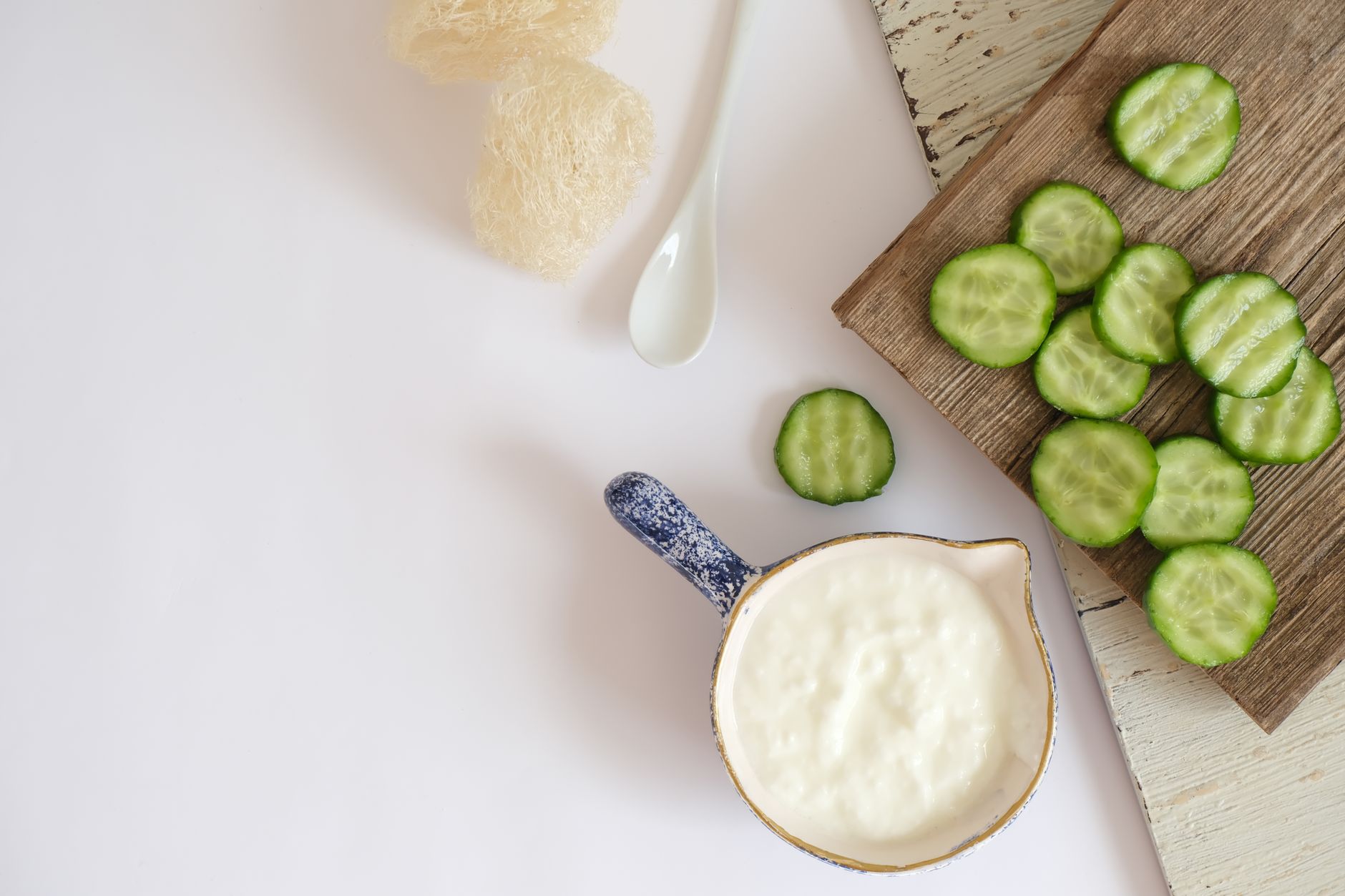
    Hot evenings kill your appetite for anything that needs an oven. You want cold, you want fresh, and you want to be done in ten minutes. That is exactly what this cucumber yogurt bowl is for.

    Here is the real reason it works: cool food, crunch, tang, and a little fat and protein all in one bowl. It feels light but it actually keeps you full. No cooking, minimal cleanup, and it flexes to whatever is in your fridge.

    What you need

    This is one serving. Double it and you have dinner for two.

    • 1 cup plain yogurt (Greek if you want it thicker)
    • 1 medium cucumber, diced or half-grated
    • 1 small clove garlic, grated (optional, but it makes it)
    • 1 tablespoon olive oil
    • 1 tablespoon lemon juice or a splash of vinegar
    • A handful of fresh herbs: dill, mint, or parsley
    • Salt and pepper
    • Optional crunch: toasted nuts, seeds, or a few crumbled crackers

    How to make it

    1. Prep the cucumber. Dice it small for texture, or grate it and squeeze out the water for a smoother bowl. Squeezing keeps it from going soupy.
    2. Season the yogurt. In a bowl, stir the yogurt with olive oil, lemon juice, grated garlic, salt, and pepper. Taste it. Adjust.
    3. Fold in the cucumber and herbs. Save a little of each to scatter on top so it looks like you tried.
    4. Finish. Drizzle a bit more olive oil, add your crunch, and eat it cold.

    That is the whole thing. Ten minutes, one bowl.

    Dairy-free swaps

    You do not need dairy for this to be good. The trick is picking an unsweetened, plant yogurt so it stays savory.

    • Coconut yogurt: creamy and rich. Go unsweetened or the lemon and garlic will fight the sugar.
    • Almond or cashew yogurt: milder and closer to dairy in flavor.
    • Soy yogurt: higher in protein than most plant options, and neutral in taste.

    Whatever you choose, taste and salt more aggressively. Plant yogurts often need it.

    Add-on proteins

    The base is light, so if this is your dinner, add something with staying power. Keep it cold or room temperature so you never touch the stove.

    • Canned chickpeas or white beans, rinsed and drained
    • Shredded rotisserie chicken if you already have it
    • Canned tuna or salmon, flaked
    • A jammy or hard-boiled egg, halved on top
    • Crumbled feta (or a dairy-free feta) for salt and bite
    • Edamame for a plant-based boost

    Serving suggestions

    This bowl plays nice with a lot of things. A few ways I actually eat it:

    • Scoop it with warm pita or flatbread torn into pieces.
    • Spoon it over a bed of cooked, cooled grains like farro or rice for a heftier meal.
    • Pile it next to sliced tomatoes and a little more olive oil for a full plate.
    • Thin it with a splash of water and use it as a cold sauce over roasted vegetables from the day before.

    The best hot-weather meals are the ones you will actually make when it is 90 degrees and you are tired. Simple wins.

    A few tips that matter

    Small things make this better without more effort:

    • Cold ingredients only. Chill the bowl for ten minutes if you have time.
    • Do not skip the salt. Yogurt bowls fall flat without it.
    • Add crunch last. Nuts and crackers go soft fast, so top the bowl right before eating.
    • Make extra base, add crunch fresh. The seasoned yogurt-cucumber mix keeps a day in the fridge.

    None of this is fancy. That is the point. When the evening is heavy and hot, you want something that cools you down and asks nothing of you.

    If you like meals and habits that fit into a real, tired day, the free 7-Day Mind-Body Reset is built the same way: small, doable, and made for actual life. Grab it if you want a gentle place to start.

    Make the bowl tonight. Adjust it to your fridge. Then make it your own.

  • How to Make Your Environment Support the Person You Are Becoming

    How to Make Your Environment Support the Person You Are Becoming

    Here’s the real reason your goals keep stalling: you’re relying on willpower in a room that’s rooting against you. Motivation is loud but flaky. Your environment is quiet and relentless. It wins.

    Good news. That works both ways. Set up your space to nudge the person you’re becoming, and you stop white-knuckling every decision. This isn’t about magic or a pricey renovation. It’s about cues you can see and friction you can remove.

    Why your environment beats your intentions

    You make hundreds of small choices a day, and most run on autopilot. Autopilot follows whatever’s easiest and whatever’s in view. If the couch is comfy and the remote is right there, you’ll sit. If your water bottle is filled and on the counter, you’ll drink.

    So stop treating change as a personality problem. Treat it as a design problem. Two levers do most of the work: visible cues (what you see reminds you what to do) and friction (how many steps stand between you and the action).

    You don’t rise to your goals. You fall to your setup.

    Lever one: make the right thing visible

    Out of sight really is out of mind. The version of you that moves daily, cooks more, or reads at night needs reminders placed in your actual path.

    • Movement: leave your shoes by the door and a mat unrolled in the corner. An unrolled mat is a standing invitation.
    • Hydration: put a full glass or bottle where you already stand each morning.
    • Calm: keep one book on your pillow so it’s the last thing you see before the phone.
    • Food: wash the fruit and set it in a bowl at eye level. Hide the snacks in an opaque container on a high shelf.

    Notice the pattern. Make the desired thing obvious. Make the thing you’re moving away from a little harder to find.

    Lever two: cut the friction

    Every extra step is a chance to quit. The becoming version of you shows up more often when showing up is stupidly easy.

    1. Count the steps. How many actions between you and the habit? Filling the bottle, finding the cap, clearing the counter. Each one leaks intention.
    2. Remove two. Prep the coffee the night before. Lay out clothes. Pre-cut the veggies. Charge the earbuds.
    3. Add friction to the drift. Log out of the app. Leave the phone charging in another room. Unplug the TV.

    You’re not trying to become a monk. You’re just making the good choice the lazy choice.

    The one-space experiment

    Don’t overhaul your whole home this weekend. You’ll burn out and resent it. Pick one space and run a small test for a week.

    How to run it

    1. Choose a space tied to a real goal. Kitchen counter for eating better. Nightstand for sleep. The corner by the window for movement.
    2. Name the person you want to be there. Not vague.
  • YMCA’s New Fitness Crypto Coin: Why Rewards Only Work If You Do

    YMCA’s New Fitness Crypto Coin: Why Rewards Only Work If You Do

    The YMCA Wants to Pay You to Work Out

    According to a report from Athletech News, the YMCA is rolling out a wellness crypto coin designed to reward members for staying active. The idea, as reported, is simple: show up, move your body, earn digital tokens for it. Turn a workout into a payout.

    I don’t have the full details of how the coin works or what you can spend it on. So I’ll keep my claims modest. But the concept is clear enough to talk about honestly. A big-name organization is betting that people will move more if you hand them a reward for it.

    They’re not wrong. And they’re not fully right either.

    Here’s the Real Reason Rewards Work

    External rewards are great at one thing: getting you started. When you’re new to a habit, motivation is thin. You don’t have momentum yet. A token, a badge, a streak, a paycheck-any of it can bridge the gap between “I should” and “I did.”

    That’s real psychology, not hype. A reward gives your brain a reason to show up before showing up feels good on its own.

    But here’s the catch nobody puts on the marketing page. External rewards can quietly replace internal ones. Researchers have watched this happen for decades. Pay someone to do a thing they already enjoy, and sometimes they enjoy it less. The reward becomes the point. Take it away, and the habit collapses.

    A reward can get you in the door. It cannot keep you in the room.

    What This Means for Everyday People

    If your gym starts handing out coins, take them. Free is free. Use the token as a nudge on the days you’re dragging. That’s a smart use of a reward.

    Just don’t let it become the whole reason you go. Because one day the program ends, the coin loses value, or the app glitches-and if that token was your only motivation, so goes your workout.

    The goal is to use the external reward as training wheels. You ride on it while you build the thing that actually lasts: a felt sense that movement makes your day better. Clearer head. Better sleep. More patience with your kids. That payoff never gets delisted.

    One Thing You Can Do Today

    Stack an internal reward onto whatever external one you’re chasing. Here’s how:

    1. Finish your workout, walk, or stretch-whatever counts.
    2. Before you check your phone or log your points, pause for ten seconds.
    3. Name out loud one way you feel better than before you started. “My shoulders dropped.” “My head’s quieter.” “I’m proud I showed up.”

    That’s it. You’re teaching your brain to notice the real reward, the one that comes from inside. Do that daily and the coin becomes a bonus instead of a crutch.

    Why the Pause Matters

    Your brain remembers what you point it at. If you only ever notice the token, that’s what your motivation attaches to. If you notice how good you feel, that’s what you’ll come back for. Same workout. Completely different relationship with it.

    This is the whole game with manifestation done the grounded way. You’re not wishing for results. You’re directing your attention on purpose, so the behavior you want becomes the behavior you crave.

    If you want a simple structure to build that muscle, our free 7-Day Mind-Body Reset at manifestedfit.com walks you through short daily moves paired with a mindset check-in. No crypto required. Just you, a few minutes, and a habit that sticks whether or not anyone’s paying you.

    Crypto coins come and go. The version of you that moves because it feels good? That one holds its value.

    Originally reported by Athletech News: “YMCA Unveils Wellness Crypto Coin to Reward Members for Fitness”. The summary and takeaways above are our own.